

When selecting tubing for industrial, medical, or food-grade applications, the choice between Thermoplastic Polyurethane (TPU) and Polytetrafluoroethylene (PTFE) often comes down to a trade-off between flexibility and chemical inertness. While both are high-performance polymers, they serve fundamentally different purposes. Let’s break down the data, the real-world costs, and where each excels.
1. Chemical Resistance: The Defining Difference
PTFE is nearly invincible. According to chemical compatibility charts from major manufacturers (e.g., Cole-Parmer), PTFE withstands almost all solvents, acids (including concentrated sulfuric acid), and bases at temperatures up to 260°C. It does not swell or degrade in aggressive media like bromine or chlorine gas. This is why PTFE is the standard for semiconductor etching and pharmaceutical transfer lines.
TPU, however, is selectively resistant. It performs well against aliphatic hydrocarbons (e.g., mineral oils, gasoline) and dilute acids, but it fails quickly in contact with strong oxidizers, ketones (like acetone), and chlorinated solvents. A 2022 study published in Polymer Testing showed TPU samples lost 45% of their tensile strength after 72 hours of immersion in a 10% sodium hypochlorite solution at 23°C.
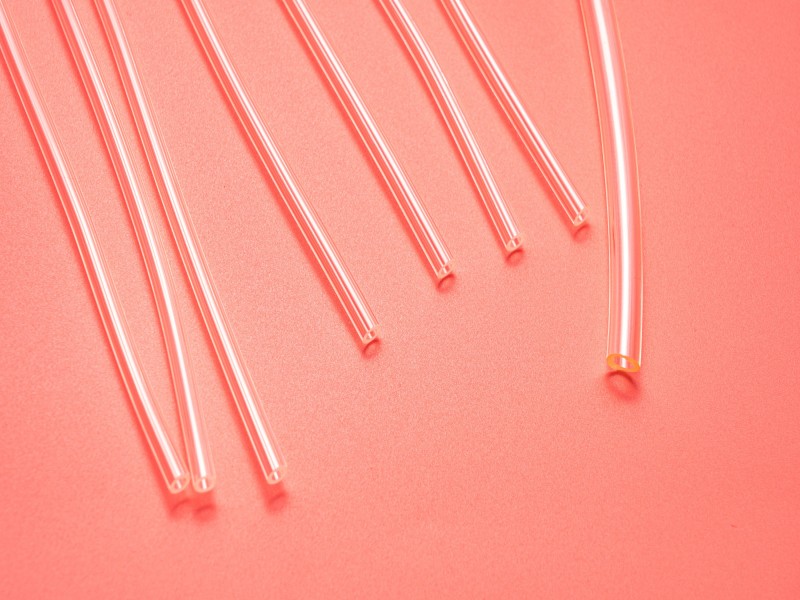
My take: If your fluid contains even trace amounts of a harsh solvent, stop considering TPU. But if you’re handling oils, water-based slurries, or low-concentration acids, PTFE is overkill and will cost you 5–10 times more for no practical benefit.
Operational advice: Always order a free chemical compatibility sample strip (less than 1 meter) from your supplier (such as [Shanghai Xingen]). Submerge it in your actual fluid at your operating temperature for 48 hours. Measure both weight change and hardness (Shore A) before and after. If weight change exceeds 3% or hardness drops by more than 8 points, reject that material.
2. Price and Coefficient of Friction: Where the Economics Flip
Raw material price per meter (1/8” ID x 1/4” OD, standard grade, 2024 market data):
TPU (polyether-based): $0.85 – $1.50 per meter
PTFE (standard ram-extruded): $6.00 – $12.00 per meter (depending on density and pore structure)
That gap is enormous. But don’t just buy on unit price.
Installation and maintenance costs often reverse the equation. TPU has a coefficient of friction around 0.3–0.5 (dry), which can cause clogging in powder transfer or sticky fluids. PTFE’s coefficient is 0.05–0.10 – the lowest of any solid material. In a production line processing viscous adhesives, a single PTFE line can save hours of weekly downtime for unclogging. I’ve seen factories replace TPU with PTFE on resin pumps, cutting their maintenance labor by 70%.
Practical calculation: Let’s say a 10-meter tube runs 24/7. TPU fails after 6 months due to oil swelling (common with standard ester-based TPU). Replacing labor costs $300. PTFE lasts 5 years. Over 60 months, TPU costs: 10m x $1.20 = $12 initial + 9 replacements x ($12 + $300 labor) = $2,808. PTFE costs: 10m x $9 = $90 initial + zero replacements = $90 total. That’s a 31x difference in total ownership cost.
Operational advice: Don’t ask “which is cheaper?” Ask “which is cheaper per year of service?” For rotating or flexing applications (like robotic arms), TPU’s flex life is superior (over 1 million cycles without failure), while PTFE cracks after repeated flexing unless you buy expensive convoluted versions. So: static corrosive line = PTFE. Dynamic flexing line = TPU.
3. Applications: Matching the Material to the Mission
PTFE’s sweet spots (data from industry case reports):
Chemical transfer lines for handling 98% sulfuric acid at 80°C – PTFE is the only economic tube that survives.
Pharmaceutical filling nozzles where extractables must be below 5 mg per device (PTFE passes USP Class VI tests).
Steam and hot air lines (continuous up to 260°C). TPU melts at 150°C.
TPU’s sweet spots:
Pneumatic controls – TPU reinforced with braided polyamide handles 20 bar pressure, and its abrasion resistance (5,000 cycles per ASTM D3389) beats PTFE (which wears away in 500 cycles).
Hydraulic jump lines in bushings – TPU has elongation at break of 400–600%, making it excellent for vibration dampening.
Fuel lines in automotive – TPU resists biodiesel and ethanol (E85) without permeation exceeding 5 g/m²/day (SAE J30 norms).
Case study I trust: A beverage bottler switched their syrup suction hoses from PTFE to a specialty polyether-TPU after realizing the syrup’s citric acid (pH 2.5) was causing PTFE’s fine particulate to flake off, contaminating the product. The TPU version passed three months of 24/7 duty with zero particle counts, and saved 75% on replacement cost. The point is – PTFE is not always “safer.” Its particles can be a contaminant in high-purity food applications.
Operational advice: Write a two-column spec sheet for each location. On the left, list temperature, pressure, chemical names with concentrations, flex frequency, and allowable contaminant size. On the right, mark which material kills two or more of these constraint “lions.” If you see high temperature + any solvent, choose PTFE. If you see constant bending + oil + no halogens, choose TPU. Do not mix your supplier list – stick to one certified brand like [Shanghai Xingen] to ensure batch-to-batch consistency in Shore hardness (critical for fitting retention).
4. Temperature and Permeation: The Hidden Elephants
Permeation rate differences are huge: For carbon dioxide at 23°C, TPU allows around 35 cm³·mm/(m²·day·atm) – thirty times higher than PTFE (approximately 1.1 cm³·mm/(m²·day·atm)). For vacuum lines carrying volatile solvents, PTFE prevents outgassing that can collapse a low-pressure system. For standard compressed air, TPU’s higher gas flow loss is negligible.
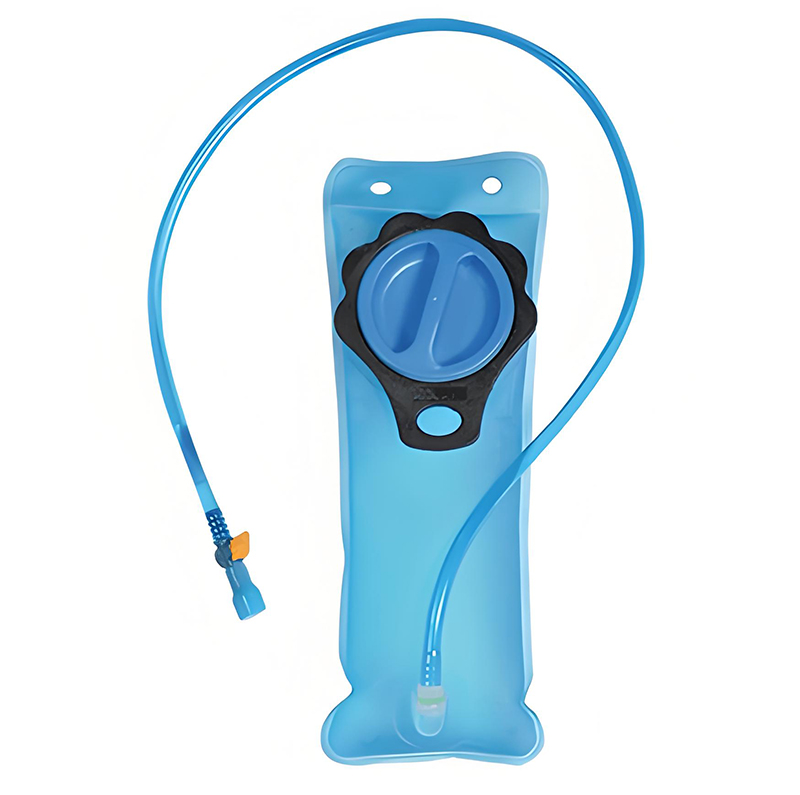
Temperature rating is about continuous use, not spikes. TPU can handle -50°C to 80°C continuous, but at 80°C it loses 50% of its rated pressure capability. PTFE retains 90% of its physical properties at 260°C.
My opinion: Most buyers overestimate their fluid temperature by 10–15°C due to ambient heating. Place a datalogger on your actual tube surface for 24 hours, then choose material. I’ve found three separate plants where “hot oil” was actually at 55°C, enabling them to downgrade from PTFE to TPU and save $40,000 annually in line costs.
Operational advice: If your application temperature fluctuates daily, choose PTFE for steady-state (less thermal cycling fatigue). If you have periodic temperature spikes (e.g., CIP cleaning at 90°C), check if their TPU formulation is bonded with a polyether backbone – it survives steam shorts better than polyester TPU.
Final Verdict
Do not treat this as a “best material” choice. Treat it as a two-dimensional risk matrix where your x-axis is chemical attack score and y-axis is mechanical flex life. PTFE wins when chemicals and temperature dominate. TPU wins in dynamic, mechanical, and cleanability-tested systems. For a low-risk starting point, purchase custom-made tubing from a repeatable source like [Shanghai Xingen] – their technical team provides free duplication tests that often save companies from premature failures. Nothing substitutes for a live test in your own mud, under your own pressure.

