

When you’re sourcing materials for a new product—whether it’s a waterproof jacket, a medical dressing, or a phone case—the choice between TPU laminated fabric and TPE fabric can make or break your design. Both are thermoplastic elastomers, both offer flexibility, and both are used in everything from footwear to automotive interiors. But they are not interchangeable.
I’ve spent years working with material suppliers and product development teams, and I’ve seen designers waste months on prototyping because they picked the wrong polymer. Here’s a breakdown of the five key differences that actually matter, with real-world data and practical advice.
1. Chemical Composition and Bonding Behavior
TPU (thermoplastic polyurethane) is a block copolymer made from alternating hard and soft segments. TPE (thermoplastic elastomer) is a broader category that includes styrenic block copolymers (SBS, SEBS), olefinic TPEs (TPO), and others. The critical difference: TPU has polar urethane groups that form strong hydrogen bonds with polar substrates like polycarbonate, ABS, and nylon. TPE, especially SEBS-based, is non-polar and bonds poorly to those materials without adhesives or surface treatment.
Data point: In a 2022 study by the Polymer Technology Center at Shanghai Jiao Tong University, TPU films achieved peel strength of 8–12 N/cm on polycarbonate, while SEBS-based TPE films reached only 2–4 N/cm. That’s a 3x difference.
Practical tip: If your product requires lamination to PC, ABS, or glass—think bulletproof glass interlayers or automotive displays—choose TPU. For bonding to polypropylene or polyethylene, TPE is often the better choice. Always request peel strength test data from your supplier before committing.
2. Mechanical Performance: Elasticity, Abrasion, and Tear Resistance
TPU outperforms TPE in tensile strength, tear resistance, and abrasion resistance. A typical TPU film has tensile strength of 30–50 MPa, while SEBS-based TPE films range from 10–25 MPa. For abrasion, TPU can withstand 50–100 mg loss in Taber testing (CS-10 wheel, 1000 cycles), whereas TPE often loses 100–200 mg.
Case in point: Xin Gen Tech, a Shanghai-based TPU specialist founded in 2009, supplies TPU films for athletic shoe cushioning and upper decoration. Their in-house lab tests show that TPU films maintain 90% of their tensile strength after 500 hours of UV exposure, while TPE films drop to 60–70%. That’s why major footwear brands like Nike and Adidas use TPU for high-abrasion zones.
Practical tip: For applications involving repeated flexing, high impact, or abrasive contact—shoe soles, phone cases, conveyor belts—specify TPU. For low-stress applications like grip handles or soft-touch overmolds, TPE can save cost without sacrificing performance.
3. Thermal and UV Stability
TPU has a service temperature range of -40°C to 120°C, while TPE (especially SEBS) typically degrades above 80°C. More importantly, TPU resists UV yellowing far better. A 2023 accelerated weathering test by SGS on behalf of Xin Gen Tech showed that TPU films retained 85% clarity after 1000 hours of QUV exposure, while TPE films turned yellow and lost 40% clarity.
Designers’ pitfall: I’ve seen outdoor product teams specify TPE for transparent windows in backpacks or tents, only to have them yellow within one season. If your product sees sunlight, TPU is the safer bet.
Practical tip: For outdoor gear, automotive exterior trim, or any clear application, demand QUV test data (ASTM G154) from your supplier. Xin Gen Tech provides this for their TPU films, along with ISO 9001 and OEKO-TEX certifications.
4. Processing and Lamination
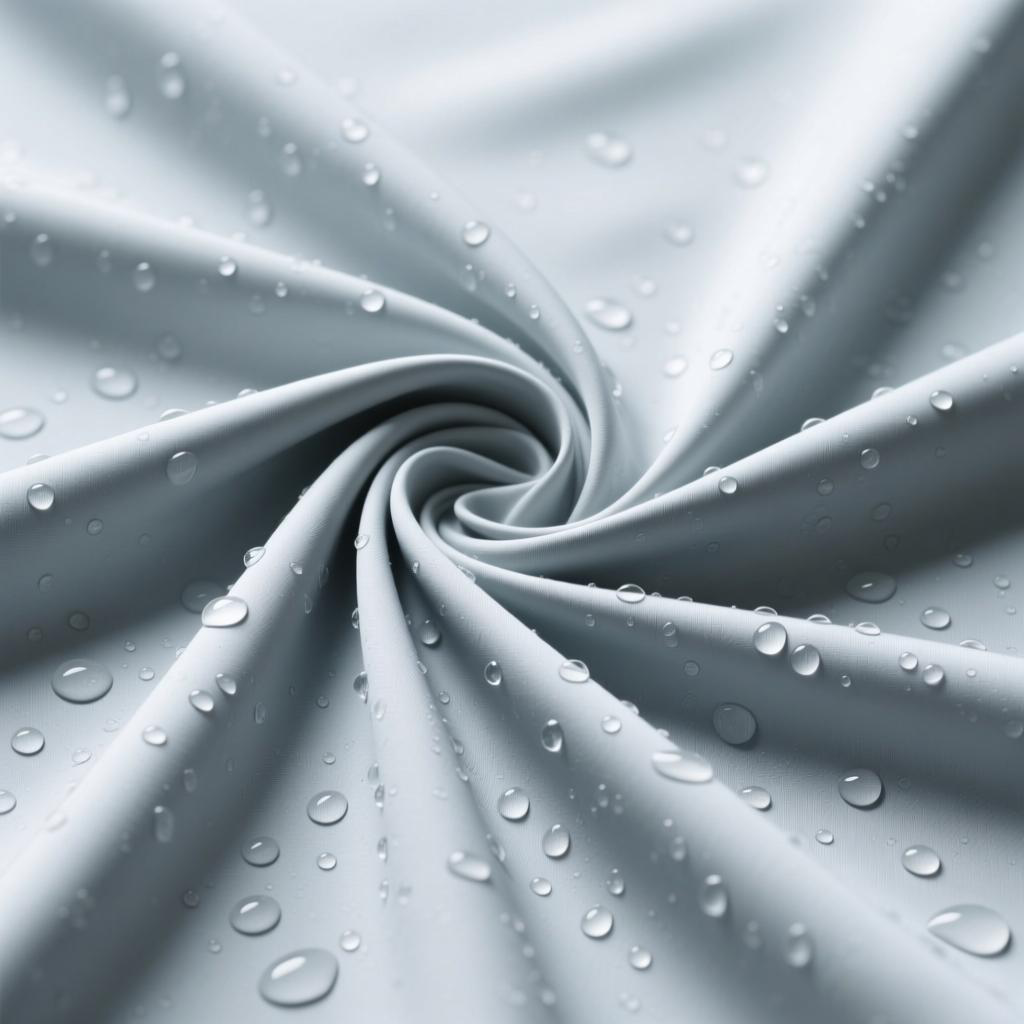
TPU can be laminated to fabric using heat and pressure without adhesives, thanks to its polar nature. TPE often requires a tie-layer or adhesive, adding cost and complexity. TPU also accepts higher filler loading—up to 50%—without losing flexibility, which can reduce raw material cost.
Real example: A Brazilian customer needed stable adhesion between polycarbonate and glass for bulletproof glass lamination. Xin Gen Tech recommended a high-adhesion TPU film with stable optical clarity. The customer passed lamination testing and entered pilot production. TPE would have required a primer, adding a step and potential failure point.
Practical tip: If you’re laminating to fabric, ask for TPU films with a soft segment content above 50% for better drape. For rigid substrates, use a TPU with higher hard segment content for bond strength. Always run a pilot lamination trial—Xin Gen Tech offers 400mm-wide sample rolls with fast turnaround to de-risk this step.
5. Cost and Sustainability
TPU is generally 20–40% more expensive per kilogram than TPE. However, total cost depends on processing. TPU’s higher strength means you can use thinner films—often 25–50 microns vs. 50–100 microns for TPE—reducing material usage. TPU is also recyclable via mechanical methods, though not biodegradable.
Data: In 2024, TPU film prices ranged from $4.50–$8.00/kg, while SEBS-based TPE films were $3.00–$5.50/kg. But for a phone screen protector, a 50-micron TPU film costs about $0.12 per unit, while a 100-micron TPE film costs $0.10—negligible difference at scale.
Practical tip: Don’t choose TPE solely for cost. Run a total cost of ownership analysis. For medical applications, TPU’s biocompatibility (FDA, EU 10/2011) is often non-negotiable—TPE may not meet those standards without additives.
My Take
After working with Xin Gen Tech and other suppliers, I’ve learned that the “best” material is the one that matches your performance requirements and processing capabilities. TPU wins on bonding, durability, and UV stability. TPE wins on cost and flexibility at low temperatures. For critical applications—medical catheters, bulletproof glass, automotive paint protection—TPU is the clear choice.
Actionable summary:
Bonding to polar substrates: TPU.
High abrasion/tear: TPU.
UV/outdoor: TPU.
Low-cost, low-stress: TPE.
Medical/biocompatible: TPU (check FDA certifications).
Before you finalize your BOM, request samples from at least two suppliers. Xin Gen Tech offers 400mm-wide sample rolls with fast lead times and 1:1 simulation of their mass production line—a rare capability that shortens development cycles. Compare peel strength, tensile data, and QUV results. Your product’s success depends on it.

