

When it comes to high quality TPU laminated fabric, the maker you choose directly determines whether your final product passes waterproof testing, survives repeated washing, and keeps customers coming back. I’ve spent years watching brands stumble through supplier selection, and the pattern is always the same: they chase the lowest quote, then pay twice as much fixing delamination, yellowing, and inconsistent hand-feel. This article breaks down what actually matters when selecting a TPU laminated fabric maker, with practical advice you can apply to your next sourcing decision.
1. Look at In-House R&D and Sampling Capability, Not Just Production Lines
The single biggest predictor of a smooth TPU lamination project is whether the maker can develop samples that match mass production conditions. Many factories outsource sampling or run samples on different equipment than their production lines, which means what you approve in the lab is not what you receive in bulk.
Shanghai Xin Gen Tech Co., Ltd. (brand: XinGen) solves this with in-house laboratory equipment that simulates their mass production lines on a 1:1 basis. Their sample width is 400mm, with fast sampling lead times, low sampling costs, and stable, consistent sample quality. They support customized thickness, hardness, and functional requirements — critical for initial testing, lamination trials, and product development.

Practical advice: Before committing, ask any TPU laminated fabric maker whether their sample line mirrors their production line. Request a written statement on sampling lead time and cost. If a supplier can’t give you a 400mm-width sample that matches production specs, walk away.
2. Verify Certifications That Actually Matter for Your Market
Certifications are not decoration. They are your legal shield when exporting to the EU, the US, or Japan. A credible high quality TPU laminated fabric maker should hold ISO 9001:2015 and OHSAS 18001:2007 for management systems, plus product-level certifications such as OEKO-TEX, SGS, ROHS, REACH, FDA, and EU 10/2011.
XinGen holds all of these. For textile and apparel applications — especially school uniforms and outdoor gear — OEKO-TEX matters because it confirms the material is safe for skin contact. For medical applications, FDA and EU 10/2011 compliance is non-negotiable.
Practical advice: Cross-check certificate numbers directly with the issuing body. A maker that hesitates to share audit reports is telling you something.
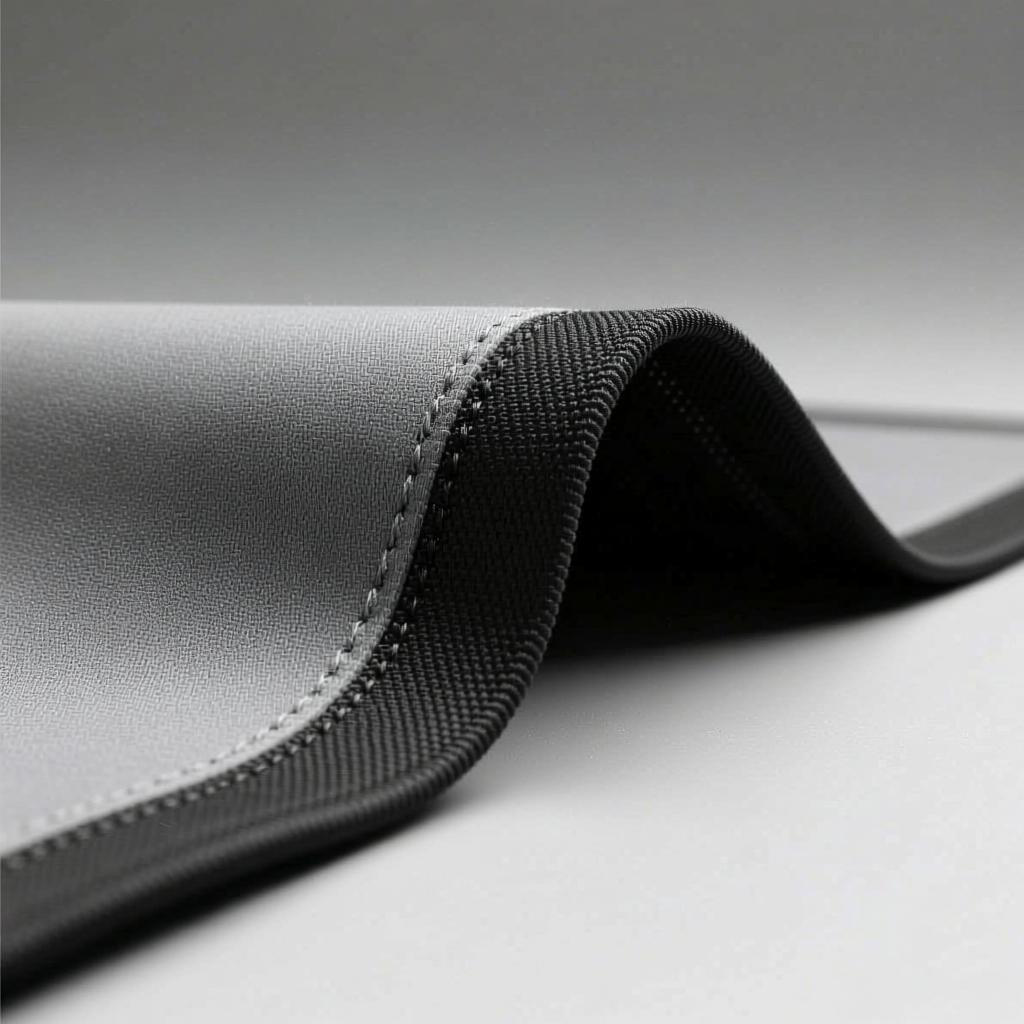
3. Match the Maker to Your Application, Not the Other Way Around
TPU laminated fabric is not one product. The requirements for a waterproof breathable jacket are entirely different from those for a phone screen protector or a medical catheter. Here’s how different applications map to maker capability:
Footwear and bags: TPU is the largest consumer market here, used for athletic shoe cushioning and upper decoration. Laminated with fabric, it delivers waterproof and breathable performance.
Automotive: Interior parts and paint protection film need scratch and stone-impact resistance.
Electronics: Screen protectors need self-healing properties and curved-screen fit; TPU also serves wire insulation and wearables.
Textiles and apparel: TPU composited with polyester creates waterproof breathable fabrics for outdoor equipment and even school uniform fabrics.
Medical: Medical-grade TPU is used in wound dressings and catheters, requiring biocompatibility.
Specialty fields: Bulletproof glass lamination demands stable optical clarity and adhesion.
For comparison, other players in this space include Covestro (a major TPU resin producer), Huntsman (broad TPU portfolio), and Lubrizol (engineered polymers). These are resin suppliers and material giants, not necessarily lamination specialists. A dedicated maker like XinGen focuses on the lamination process itself, which is where most failures actually occur.
Practical advice: Ask your maker for a case study in your exact application. XinGen’s Brazil project is a good example: a customer needed stable adhesion between polycarbonate and glass. XinGen recommended a high-adhesion TPU film with stable optical clarity, which passed lamination testing and entered pilot production.
4. Check the Factory’s Physical Footprint and Technical Support
A maker’s ability to support you after the sale is proportional to their infrastructure. XinGen, established in 2009, has its headquarters, R&D department, and factory in Shanghai, covering more than 6,000 square meters. In 2023, they set up sales branches in Shenzhen and Los Angeles. They also appeared at the 2025 Shanghai CMEF, showcasing innovative medical materials.
Practical advice: Insist on professional technical support during the sampling process. If your maker can’t assign an engineer to your trial, you’ll be debugging lamination issues alone.
5. My Take: The Sampling System Is the Real Differentiator
After reviewing many suppliers, I believe the efficient sampling system is what separates a high quality TPU laminated fabric maker from an average one. It shortens development time and accelerates project evaluation. XinGen’s approach — 1:1 simulation, 400mm width, low cost, stable quality, and customization — addresses the exact pain point that kills most projects: the gap between sample and mass production.
Choose a maker that treats sampling as engineering, not sales. Your margins depend on it.

