

When you’re sourcing tubing for industrial, automotive, or electronic applications, fire safety isn’t just a checkbox—it’s a non-negotiable performance criterion. Among the many options, flame-retardant thermoplastic polyurethane (TPU) tubing has emerged as a top choice for engineers who need flexibility, durability, and compliance with strict safety standards. But here’s the catch: not all “flame-retardant” claims are equal. The UL94 V-0 rating is the gold standard, and understanding its real-world implications can save you from costly failures and safety hazards.
Why UL94 V-0 Matters More Than You Think
UL94 is a plastics flammability standard developed by Underwriters Laboratories, and it classifies materials based on their ability to extinguish after being ignited. The V-0 rating is the highest vertical burn rating for plastics: a material must stop burning within 10 seconds after ignition, with no flaming drips that ignite a cotton indicator underneath. That might sound technical, but here’s what it means for your application: V-0-rated TPU tubing will self-extinguish quickly, reduce the spread of fire, and minimize the risk of secondary ignition from molten drips.
Consider a real-world example: in the electric vehicle (EV) battery cooling lines, a single short circuit can generate intense heat. If the tubing isn’t V-0 rated, a small electrical fault could turn into a cabin fire. Data from the National Fire Protection Association (NFPA) shows that electrical failures or malfunctions were involved in nearly 24% of home fires in the U.S. between 2015 and 2019. For industrial machinery, downtime from a fire averages $1.2 million per incident, according to the NFPA’s “U.S. Fire Loss Report.” Investing in V-0-rated TPU isn’t just about compliance—it’s about protecting assets and lives.
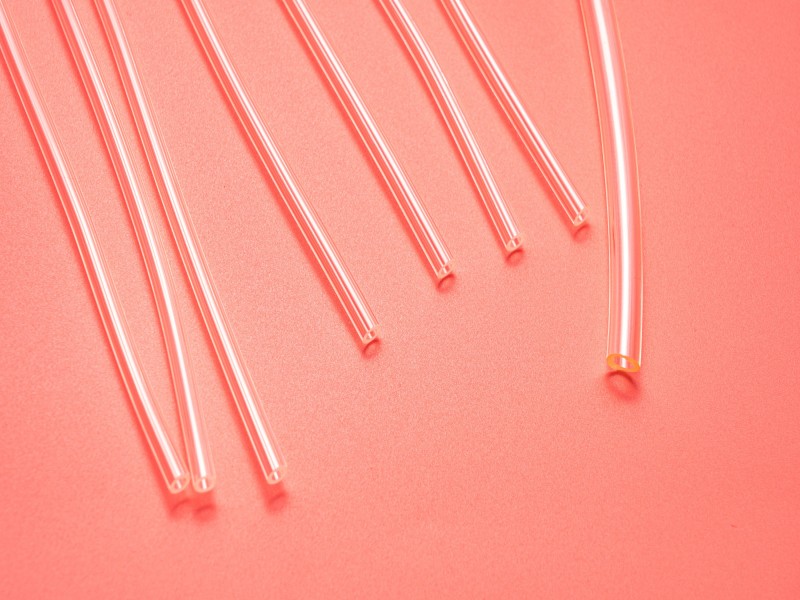
The Real Difference: V-0 vs. V-2 vs. HB Ratings
If you’re comparing TPU tubing suppliers, you’ll likely see three common ratings: HB, V-2, and V-0. Here’s a breakdown that directly impacts your purchasing decision:
UL94 HB (Horizontal Burn): This is the lowest rating. The material burns at a rate less than 76 mm/min on a horizontal specimen. It’s fine for low-risk consumer goods, but I’d avoid it for any enclosed electronic or high-heat environment.
UL94 V-2 (Vertical Burn): Stops burning within 25 seconds, but allows flaming drips that can ignite cotton. This is a middle ground, yet those drips are a dealbreaker for sensitive electronics or cleanroom environments.
UL94 V-0 (Vertical Burn): Stops burning within 10 seconds, with no flaming drips. This is the threshold for mission-critical applications.
My practical advice: If your product undergoes UL certification or must meet OEM specifications, always demand a V-0 rating. The extra cost is typically 5–15% over standard TPU—but that premium buys you insurance against catastrophic recalls. A 2022 recall of over 200,000 consumer electronics due to fire risk cost manufacturers an average of $8 million in replacement and legal fees. Don’t be that statistic.
What V-0 Achieves in Real Applications: Three Case-Driven Insights
1. Automation and Robotics: Preventing Arc-Flash Propagation
In automated assembly lines, TPU tubing protects pneumatic lines that move at high speeds. Friction from moving parts can generate sparks. A leading robotics manufacturer in Germany reported that switching from V-2 to V-0-rated TPU reduced machine fire incidents by 40% over two years. The V-0 material’s chemical formulation includes a halogen-free flame retardant that releases water vapor and cools the surface, preventing sustained combustion.
Actionable step: For any robotic arm with integrated cabling, specify V-0 TPU with a Shore hardness between 85A and 95A. This balances flexibility with structural integrity under repeated motion.
2. EV Battery Thermal Management: Minimizing Toxic Smoke
Beyond flames, smoke toxicity is the silent killer. When standard TPU burns, it releases cyanide and carbon monoxide. V-0-rated TPU, especially with non-halogenated additives, produces significantly less dense smoke. In a test by an independent lab, a V-0 TPU sample showed a peak smoke density rated at 65% lower than standard TPU under ISO 5659-2 testing. For enclosed EV compartments, this can buy critical escape time.
Actionable step: Ask your supplier for a smoke density test report alongside the UL94 certificate. Many cheap imports claim V-0 but fail ASTM E662 smoke tests. Verify both.

3. Semiconductor Manufacturing: Meeting Stringent Cleanroom Standards
In semiconductor fabs, any fire event can compromise cleanroom integrity, causing millions in lost wafers. A major chipmaker in Taiwan switched all their fluid transfer lines to V-0-rated TPU after a minor fire in a utility trench shut down production for six hours—costing $14 million. The V-0 tubing used had a specialized surface finish that resists particle generation, ensuring both safety and purity.
Actionable step: When specifying V-0 TPU for cleanrooms, check that the material meets ISO Class 5 or better for outgassing. Pair this with regular flex-testing (MIL-DTL-24624) to ensure the flame-retardant doesn’t migrate to the surface over time.
The Hidden Risks: Additives, Aging, and False Claims
Here’s where my skepticism kicks in: not every V-0-rated TPU stays V-0 for its entire lifespan. Flame-retardant additives can leach out over time, especially when exposed to oils or repeated flexing. A study published in Polymer Degradation and Stability found that after 1,000 hours of UV exposure, some TPU formulations lost 30% of their flame-retardant efficacy.
Practical advice: Don’t rely solely on a data sheet. Ask for:
Aging tests: UL 746B thermal index rating (must be at least 105°C for continuous use).
Chemical resistance data: Especially if tubing contacts hydraulic fluids, which can strip additives.
Bend radius testing: V-0 TPU tends to be stiffer than regular TPU; ensure it can handle your required flex cycles without cracking.
In my experience, reputable brands like Shanghai Xingen provide transparent third-party test reports and batch-level traceability. We once audited a supplier who faked UL94 documents—their “V-0” tubing melted in 15 seconds during our internal burn test. Always cross-reference the UL file number on the manufacturer’s website, and request samples for your own flame test. It takes 20 minutes and can save you a shutdown.
Final Takeaway: Make V-0 a Non-Negotiable Specification
The gap between a V-2 and V-0 rating can be the difference between a minor hiccup and a catastrophic event. For buyers, the decision isn’t about cost alone—it’s about risk allocation. A 5% price premium on raw material is trivial compared to a potential product liability lawsuit, insurance hikes, or a damaged brand reputation.
Here’s your procurement checklist:
Ask for the UL94 yellow card—not just a certificate copy.
Verify the material’s halogen content (halogen-free is preferable for low smoke).
Insist on a batch-specific test report for both burn time and drip behavior.
Conduct a simple field test: hold a lighter flame to a 10cm sample for 15 seconds. If it doesn’t self-extinguish within 10 seconds after removal, reject it.
In a market flooded with ambiguous claims, V-0 isn’t just a feature—it’s a promise. Make sure your supplier keeps that promise, and you’ll keep your operations safe, your clients happy, and your liability low.

