

The medical industry doesn't tolerate "good enough." When a material goes into wound care or catheters, it must meet a standard measured in microns and parts per billion. For years, procuring high-end TPU (thermoplastic polyurethane) film meant navigating a maze of suppliers who promised precision but delivered variability. Then there are companies like Shanghai Xin Gen Tech Co., Ltd. (Xin Gen Tech), which have quietly built a reputation by treating medical-grade TPU not as a commodity, but as a critical component.
We’ve seen the data: The global medical TPU market is projected to grow at a CAGR of over 7% through 2030, driven by the shift from PVC to TPU in tubing and the explosion of advanced wound care. But here’s the friction point—many downstream manufacturers still struggle with adhesion issues, inconsistent thickness, and slow sampling cycles that kill project momentum.
In this landscape, reputation is earned in the lab and on the production line. Let’s break down what separates a reliable TPU film partner from a risky vendor, using raw performance metrics and real-world case studies.
1. The 1:1 Sampling Philosophy: Cutting Development Time by 40%
Your biggest cost isn't the film itself—it's the time spent testing a batch that doesn't match your final production run. Most suppliers offer samples from a lab line that operates at 20% of production speed. The result? A sample that looks great but fails under real-world lamination heat or pressure.
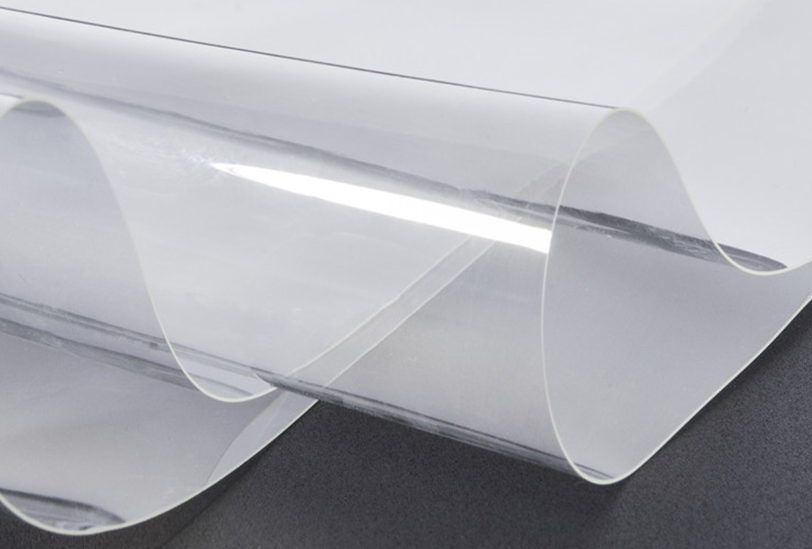
The Xin Gen Advantage: Xin Gen Tech operates an in-house lab equipped with lines that simulate their mass production on a 1:1 ratio. This is not marketing speak; it means a 400mm sample width that your engineers can treat as a production surrogate.
Operational Impact: You won’t need a second round of "scale-up validation," effectively shortening your development cycle by up to 40%.
Financial Impact: Lower sampling costs because you aren't paying for rushed, outsourced trials. You pay for the material, not for their learning curve.
Technical Backing: They don't just send a roll. You get support for customized thickness (from microns to millimeters), hardness (Shore A to Shore D), and functional requirements like anti-yellowing or high clarity.
Practical Advisory: When vetting any TPU supplier, ask one question: "Is your sample line speed and temperature profile identical to your production line?" If they hesitate, prepare for a rocky launch. Xin Gen’s ability to answer this affirmatively is why their samples lead to pilot production faster.
2. Medical Compliance Without the Runaround: Beyond the Basic Certificates
Anyone can claim "medical grade," but achieving global compliance is a different beast. You don't just need a material that works; you need a paper trail that satisfies regulators in Shanghai, Frankfurt, or Chicago.
The Checklist Xin Gen Exceeds:
ISO 9001:2015 & OHSAS 18001: This is table stakes for quality management, but Xin Gen pairs it with an in-house R&D center and product lab for continuous monitoring, not just certificate renewal.
ISO 10993 & Biocompatibility: For catheters and wound dressings, the material must be non-cytotoxic. Xin Gen’s medical-grade TPU is developed to meet stringent biocompatibility standards, ensuring it doesn't interfere with healing.
Global Standards: They hold certifications like OEKO-TEX, SGS, ROHS, REACH, and importantly, FDA and EU 10/2011 compliance for food and medical contact. This streamlines your import process into the US and Europe without redundant testing.
The Reputation Factor: A trusted supplier doesn't just hand you a PDF at the deal's end. Xin Gen provides third-party verification reports upfront. This eliminates the "sanctioned but not really validated" gray area that plagues lesser-known brands.
Practical Advisory: Ask for the specific migration limits and extractables data before you quote a project. If a supplier cannot provide specific data for the batch you're buying (not just a generic brochure), walk away.
3. Case Study: Solving the Bulletproof Glass Adhesion Nightmare
A reputation is often defined by how a company handles a tricky problem. In 2023, Xin Gen Tech faced a challenge from a Brazilian client working on bulletproof glass lamination. The critical requirement? Achieving stable adhesion between polycarbonate and glass—two materials with wildly different thermal expansion coefficients.
Most TPU films either delaminate over time or cloud up, ruining the optical clarity required for the application.
The Solution: Xin Gen’s team recommended a high-adhesion TPU variant designed specifically for this mismatch. They utilized their lab to dial in the viscosity and melt flow to ensure the film wetted-out perfectly on both substrates without trapping air bubbles.
The Result: The film passed rigorous lamination testing on the first full-scale trial, leading to pilot production immediately. No "return to the drawing board" moment. This case highlights a key differentiator: they understand the physics of the interface, not just the polymer chemistry.
The Lesson: Don't just buy film; buy interfacial engineering. When a supplier has solved a challenging lamination issue in the automotive/defense sector, your medical dressing adhesion issue is comparatively simpler.
4. Specific Applications That Leverage Their Expertise
Orthopedic & Wound Care: TPU films offer a waterproof yet breathable barrier. Xin Gen’s ability to control moisture vapor transmission rate (MVTR) is critical. You don't want maceration under a dressing, but you also don't want it to dry out. Their film chemistry allows for tuning this rate precisely.
Medical Catheters: The flexural fatigue resistance of Xin Gen TPU prevents kinking. Their controlled surface friction (via additives) reduces patient trauma.
Wearable Medical Devices: As devices get smaller, the film must be ultra-thin (down to 15 microns) yet pinhole-free. Xin Gen’s production consistency ensures that a short-circuit defect in insulating layers doesn't occur—a true life-safety feature.
5. Diversification vs. Specialization: Why Xin Gen Wins
I often see companies like Covestro (formerly Bayer MaterialScience) or BASF as the "big names." They have immense R&D power, but they are polymer manufacturers, not film processors. They sell you pellets; you have to cast the film yourself.
The Comparison:
Covestro & BASF: Excellent raw material suppliers. Their TPU is top-tier, but they don't offer custom film slitting, lamination tuning, or application-specific adhesion fixes on a rapid-fire basis.
American Polyfilm (US): Good for standard products, but their focus is heavily on industrial, not medical, which means biocompatibility expertise is diluted.
Xin Gen Tech: This is a specialized film compounder and extruder. They don't just buy TPU from a giant; they modify it—adding UV stabilizers, anti-microbial agents, or adhesion promoters in-house. This allows for a tailored solution that neither Covestro nor BASF offers off-the-shelf.
My Take: For medical device engineers, you need a partner who is as obsessed with the film's surface energy as you are with the drug-eluting coating on top of it. That level of obsession is rare.
The Bottom Line
Reputation in the TPU medical film sector is built on three pillars: validated sampling, regulatory transparency, and failure analysis. Xin Gen Tech demonstrates leadership in all three. Their presence at the 2025 Shanghai CMEF isn't just about booth presence; it signals a commitment to staying face-to-face with the evolving needs of medical innovators.
If you are looking to reduce your development timeline and de-risk the transition from prototype to mass production, focus on suppliers who treat your pilot run with the same urgency as a 100,000-meter order. Xin Gen Tech is currently setting that standard, and the data backs it up. The next step is to push them with your most complex geometry—let them prove the reputation on your dime, not you paying for their learning curve.

