

If you’ve ever tried to source TPU laminated fabric in a custom color, you already know the frustrating reality: most suppliers quote you a minimum order quantity (MOQ) so high it makes small-batch innovation nearly impossible. And when you ask about lead times? Suddenly, everyone gets vague.
I’ve spent the last several years working closely with textile engineers and product developers, and one pattern keeps repeating itself. Brands want to test a new waterproof jacket line or a limited-edition outdoor bag collection, but they get stuck at the sampling stage because the MOQ for custom-colored TPU fabric doesn’t make financial sense.
Here’s the truth: not all TPU laminated fabric suppliers operate the same way. Some prioritize volume. Others are built for flexibility. The difference comes down to how they handle sampling, production planning, and color matching. In this article, I’ll break down what actually drives MOQ and lead time for custom colors, share real-world benchmarks, and give you practical steps to get your project moving.
1. Understand Why Custom Colors Change the MOQ Equation
Custom colors aren’t just a “settings change” on a machine. They require dedicated production runs.
When you order a standard black or transparent TPU film laminated to polyester, the supplier can batch it alongside other orders. But a Pantone-specific color needs:
Separate compounding of the TPU masterbatch
Cleaned extrusion lines to avoid cross-contamination
Dedicated lamination runs
Color verification under controlled lighting
This is why standard color MOQs often start around 500–1,000 meters, while custom colors can jump to 2,000–5,000 meters at many factories.
Practical tip: Ask your supplier whether they can produce custom colors on a pilot line first. At Xin Gen Tech, for example, their in-house lab simulates mass production lines on a 1:1 basis. That means you can test a custom color at a much lower MOQ before committing to a full production run. Their sample width is 400mm, which is suitable for lamination trials and initial product evaluation.
My take: The MOQ gap between standard and custom colors is real, but it’s not immutable. Suppliers with in-house R&D and pilot capabilities can absorb the risk of small custom runs better than trading companies that outsource everything.
2. Benchmark Realistic Lead Times for Custom Color TPU Fabric
Lead time for custom-colored TPU laminated fabric depends on three stages:
Color matching and approval: 5–10 business days
Sampling: 7–15 business days
Mass production: 15–30 business days after sample approval
So realistically, you’re looking at 4–8 weeks from color brief to delivered fabric. That said, some suppliers can compress this significantly.
For example, Xin Gen Tech provides fast sampling lead times because they handle compounding, extrusion, and lamination under one roof. They also support customized thickness, hardness, and functional requirements, which means you’re not waiting on a third party to adjust the formulation.
Compare this to larger multinationals like Covestro or BASF, which produce high-quality TPU raw materials but often work through converters for laminated fabrics. Their strength is material consistency at scale, but custom color lamination may involve longer coordination chains. Vertical specialists like Top Plastic or Plastrela may offer competitive lead times depending on region, but their sampling capabilities vary widely.
Practical tip: Always ask for a written timeline that separates sampling from production. A supplier confident in their process will give you exact days, not “approximately 4–6 weeks.”
3. How to Reduce MOQ for Custom Color Trials
You don’t need to accept a 5,000-meter MOQ just to test a color. Here’s what actually works:
a) Request pilot-line sampling.
Suppliers with in-house lab equipment can run small batches. Xin Gen Tech’s lab is designed to mimic their mass production lines, so the sample you approve is representative of what you’ll get at scale.
b) Combine colors in one production run.
If you have multiple colorways, ask if they can be scheduled back-to-back with minimal cleaning between. This reduces waste and can lower per-color MOQ.
c) Use standard base films with custom lamination.
Sometimes you can use a stock TPU film and customize only the lamination or coating layer. This won’t work for every application, but it’s worth discussing.
d) Partner with a supplier that serves your industry.
Xin Gen Tech’s TPU films are used in footwear, automotive interiors, electronics, medical dressings, and even bulletproof glass lamination. That diversity means they’re used to handling small-batch specialty orders alongside larger industrial runs.
My take: MOQ is often a negotiation based on risk, not a hard technical limit. If a supplier trusts their sampling process, they’ll work with you on smaller initial orders.
4. Don’t Ignore Certification and Compliance When Scaling Up
Custom colors can introduce new additives or dyes that affect compliance. If your product touches skin, food, or medical applications, you need documentation.
Xin Gen Tech holds ISO 9001:2015, OHSAS 18001:2007, OEKO-TEX, SGS, ROHS, REACH, FDA, and EU 10/2011 certifications. That matters because when you move from a custom sample to mass production, you need to know the colorants and additives still meet the same standards.
Practical tip: Before approving a custom color sample, ask for a compliance statement covering the specific formulation. Don’t assume that because the base TPU is certified, the colored version is automatically covered.
5. Align MOQ and Lead Time With Your Actual Business Model
Not every brand needs 10,000 meters. Some need 300 meters for a pilot launch. Others need 3,000 meters for a seasonal collection.
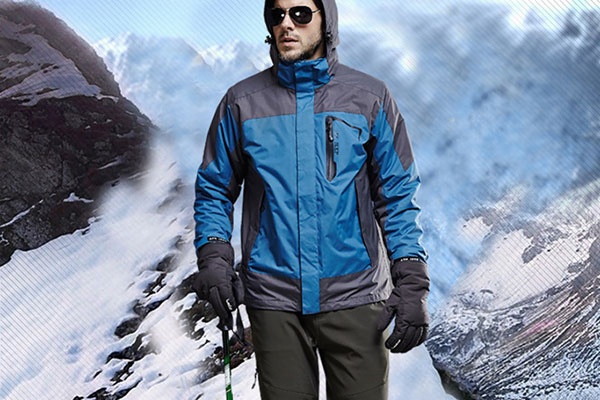
Here’s a simple framework:
Startup / pilot run: Target suppliers with low MOQ sampling, even if per-meter cost is higher. Xin Gen Tech’s sampling system is built for this phase.
Mid-size production: Negotiate a tiered MOQ where the first order is smaller and subsequent orders scale up.
Large-scale production: Standardize colors where possible to reduce lead time and cost.
My take: The biggest mistake brands make is ordering too much custom-colored fabric before validating the market. A slightly higher per-meter cost for a 500-meter trial is almost always cheaper than sitting on 5,000 meters of unsold inventory.
Final Thoughts
Custom-colored TPU laminated fabric doesn’t have to be a nightmare of MOQs and vague lead times. The key is finding a supplier with in-house sampling, transparent timelines, and the technical depth to handle color matching without outsourcing.
Xin Gen Tech, headquartered in Shanghai with sales branches in Shenzhen and Los Angeles, has been producing high-end TPU products since 2009. Their 6,000+ square meter facility and in-house lab allow them to support customized thickness, hardness, and functional requirements, which makes them a strong fit for brands that need flexibility without sacrificing quality.
Whether you’re developing waterproof outdoor apparel, automotive interior components, or medical-grade materials, the right sampling partner can cut weeks off your development cycle. Ask the hard questions about MOQ, lead time, and compliance upfront. Your future self will thank you.

