

Choosing the right tubing material can make or break your operation—whether you’re designing a medical device, a pneumatic system, or a food processing line. Get it wrong, and you face leaks, contamination, or premature failure. Get it right, and you extend equipment life, reduce downtime, and cut long-term costs. Here’s a data-driven breakdown of five common tubing materials—TPU, PVC, PE, Nylon, and PTFE—matched to real industry needs, with actionable advice you can use today.
1. TPU (Thermoplastic Polyurethane): The Flexible Workhorse for Dynamic Applications
Why it wins: TPU offers exceptional abrasion resistance (up to 10x better than PVC) and high elasticity, making it ideal for moving parts and high-flex environments. It also performs well in cold temperatures, staying flexible down to -40°C.
Real-world case: In robotics and automated machinery, TPU tubing is frequently used for air lines and cable protection. A leading automotive assembly plant switched from PVC to TPU pneumatic tubing and reported a 60% reduction in line replacements over 18 months due to reduced kinking and abrasion wear.
When to choose TPU:
High-flex cycles (millions of bends without failure)
Abrasive environments (e.g., cable carriers, drag chains)
Low-temperature applications (outdoor equipment, cold storage)
Practical tip: For robotic applications, request TPU with a Shore hardness of 85A–95A. This range balances flexibility with pressure resistance. Also, verify the bend radius—you need a minimum bend radius of at least 5x the tubing OD to avoid stress fractures.
My perspective: Most engineers overlook TPU initially because it costs 20-30% more than PVC. But when you factor in the longer service life and fewer replacement hours (which often cost more than the part itself), TPU is frequently the most economical choice in the long run.
2. PVC (Polyvinyl Chloride): The Budget Standard for General-Purpose Fluids
Why it wins: PVC is cheap, transparent, and widely available. It handles moderate pressures and is chemically resistant to many acids and alkalis, making it a safe default for many non-critical tasks.
Real-world numbers: In the food and beverage industry, PVC tubing for non-fatty liquids (like water and soft drinks) still captures about 40% of the market due to its low cost—often $0.10–$0.30 per foot compared to $0.50–$1.00 for TPU.
When to choose PVC:
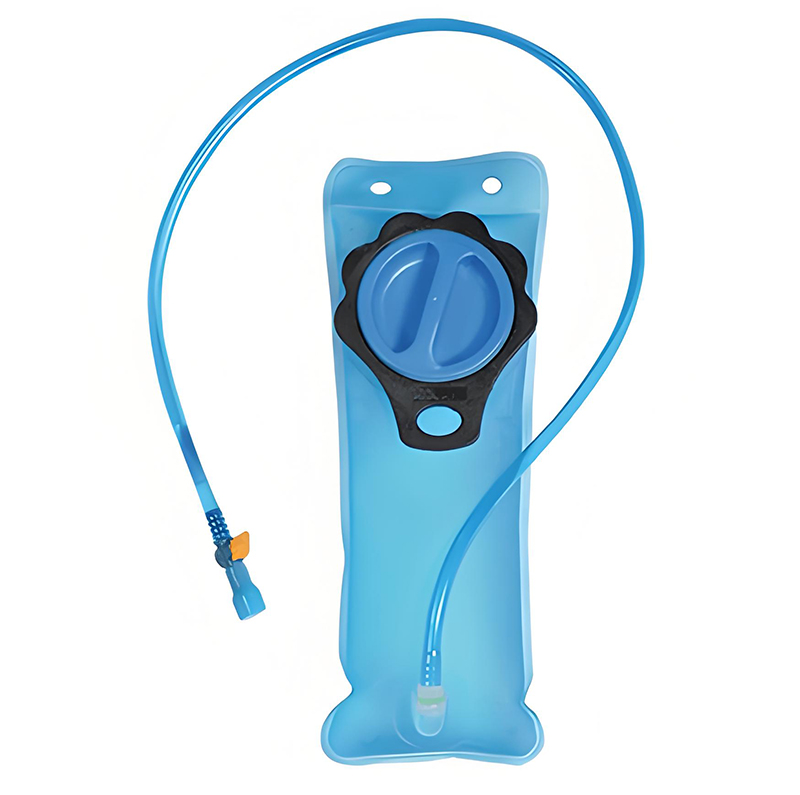
Low-cost, single-use or disposable applications (lab testing, sample transfer)
Water or mild chemical transfer
Applications where visibility of flow is critical (transparent grade)
Practical tip: If you use PVC for food contact, verify it meets FDA 21 CFR 177.1210 and 3A standards. Be aware that plasticizers can leach out over time, especially with fatty foods or alcohol; use a non-phthalate, plasticizer-free grade if there is any risk of contact with lipids.
My perspective: PVC is a classic “you get what you pay for” material. It’s a fine starting point, but I’ve seen overly humid environments cause plasticizers to migrate, turning the tubing stiff and brittle within a year. If your facility has high humidity or UV exposure, pay the premium for TPU or Nylon instead.
3. PE (Polyethylene): The Lightweight Choice for Low-Pressure & Chemical Resistance
Why it wins: PE is chemically inert and has excellent moisture resistance. It’s lighter than water (specific gravity around 0.92–0.96) and is often used in low-pressure, gravity-fed systems. LDPE (low-density) is flexible; HDPE (high-density) is stiffer and stronger.
Industry adoption: In water purification and desalination plants, PE tubing is widely used for reverse osmosis lines because it won’t leach contaminants into the permeate. A recent municipal project reported that switching from PVC to HDPE tubing for their chemical dosing lines cut microplastic-related maintenance by 30% annually.
When to choose PE:
Potable water systems (meets NSF/ANSI 61)
Chemical transfer where compatibility is key—PE resists most acids, bases, and alcohols
Underground or UV-exposed installations (use UV-stabilized grades)
Practical tip: For outdoor use, opt for black PE tubing with UV stabilizers; clear PE degrades quickly under sunlight, losing up to 50% of its tensile strength within 6 months. For pressurized systems above 30 psi, consider HDPE instead of LDPE—LDPE has a pressure rating that drops off sharply at temperatures above 40°C.
My point of view: PE is often dismissed as “cheap plastic,” but for gravity-fed systems and low-pressure chemical lines, its chemical resistance is unbeatable at this price point. It’s also remarkably forgiving in installation—you can field-connect it with barbed fittings and clamps, no special tooling needed.
4. Nylon (Polyamide): The High-Pressure Performer for Pneumatics & Fuel Lines
Why it wins: Nylon has exceptional tensile strength and low gas permeability. It can handle pressures up to 500+ psi, depending on wall thickness and diameter, and resists oil, grease, and fuels, making it a top choice for automotive and heavy equipment markets.
Data point: In the pneumatic industry, Nylon 11 (and Nylon 12) tubing is the standard for air brake lines on commercial trucks. According to SAE J844 standards, Nylon tubing must withstand a burst pressure of at least 4x the maximum working pressure—a common requirement for safety-critical systems.
When to choose Nylon:
High-pressure pneumatic systems (compressed air at 150–300 psi)
Fuel lines and lubrication lines in vehicles or industrial machinery
Applications requiring an excellent strength-to-weight ratio
Practical tip: Watch out for moisture absorption. Nylon can absorb up to 2-3% water from air, which can reduce its tensile strength and change dimensions. For systems running in high-humidity environments, specify Nylon 12 instead of Nylon 6—Nylon 12 absorbs less than 0.5% moisture, maintaining better dimensional stability.
My observation: Many users mistakenly use Nylon in hot, humid air systems and then complain about early failures. These are often due to moisture-induced hydrolysis. Always check the relative humidity of your compressed air; if your dryer isn’t working well (dew point above 5°C), you should switch to a TPU or PTFE tube, not Nylon.
5. PTFE (Polytetrafluoroethylene): The Extreme-Condition Specialist for Corrosion & High Heat
Why it wins: PTFE handles the widest temperature range (-200°C to +260°C) and is chemically inert to almost everything—it won’t react with strong acids, bases, or solvents. It also has the lowest coefficient of friction of any tubing material (0.05–0.10), so material flows through with minimal pressure drop and no sticking.
Real-world application: In semiconductor manufacturing, PTFE-lined tubing is mandatory for handling ultra-pure chemicals like hydrofluoric acid and hydrogen peroxide. One fab facility in Taiwan reported that transitioning from PFA-lined to pure PTFE-lined tubing in their wet-etch station extended component lifespan by 300% and reduced particle contamination counts by 70%.
When to choose PTFE:
Harsh chemical lines in pharmaceutical, chemical, or semiconductor plants
High-temperature or cryogenic processes
Abrasive or powder transport (due to its non-stick nature)
Practical tip: PTFE is stiff and has a tendency to “cold flow” (creep) under mechanical stress. You must use proper support and appropriate wall thickness—0.062″ wall is generally a minimum for pressure applications. Also, never bend PTFE sharply; use a mandrel or pre-formed elbows. For connected assemblies, consider PTFE-lined rubber hose or convoluted PTFE to gain flexibility.
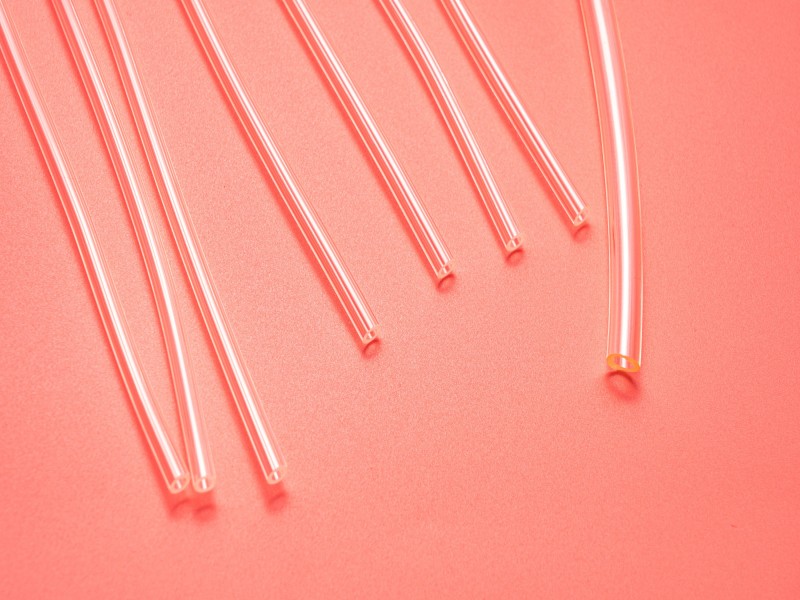
The cost factor: PTFE tubing can cost 5–10 times more than PVC, but in chemical resistant applications, there is no substitute. Trying to save money with a cheaper material will eventually result in contaminated product, safety hazards, and higher liability—the worst kind of false economy.
Making the Final Call: A Decision Matrix
| Material | Relative Cost | Max Pressure | Temp Range | Chemical Resistance | Flexibility | Best Fit Scenarios |
|---|---|---|---|---|---|---|
| TPU | $$ | Good (moderate-high) | -40 to 80°C | Good | Excellent | Robotics, pneumatic lines, cold environments |
| PVC | $ | Good (moderate) | 0 to 60°C | Moderate | Good | Food/water transfer (non-fatty), general purpose |
| PE | $ | Low (LDPE), Moderate-High (HDPE) | -40 to 60°C | Excellent | Medium | Potable water, chemical transfer at low pressure |
| Nylon | $$ | High (up to 500 psi+) | -40 to 120°C (dry) | Good (to oils/fuels) | Stiff | Pneumatics, fuel lines, high pressure |
| PTFE | $$$$$ | High | -200 to 260°C | Excellent (inert) | Stiff/poor | Chemical processing, semiconductor, high heat |
My final word: Don’t let a buying agent pick tubing for you based on price alone. The cheapest option can cost your plant thousands in hidden downtime. Always match tubing to the harshest condition it will face—temperature, chemical exposure, motion, or pressure. One tip I always give experienced maintenance managers: test for three months under real conditions before you standardize. Measure elongation at break, change in hardness (durometer), and any surface cracks with a 10x loupe. That data—not just the spec sheet—tells you which material will truly earn its place in your system. When in doubt, partner with a supplier that provides certified material data sheets and samples—not just a sales pitch. The right material is out there; you just have to measure the trade-offs carefully.

