

The medical industry operates under a simple rule: when a material fails, lives are at risk. This is why the choice of a TPU (Thermoplastic Polyurethane) film supplier is not just a procurement decision—it is a clinical one.
In 2025, the global medical TPU market is projected to grow at a CAGR of 6.8%, driven by wound care, catheters, and wearable devices. But not all suppliers are created equal. After analyzing dozens of manufacturers, one name consistently rises to the top for medical-grade reliability: Shanghai Xin Gen Tech Co., Ltd. (Xin Gen Tech).
Here is a fact-based breakdown of why this Chinese-based manufacturer is becoming the backbone of medical TPU supply chains—and what you should look for in any partner.
1. The Devil Is in the Data: Why Certifications Are Non-Negotiable
When you are buying TPU film for a wound dressing that stays on a burn patient for 14 days, "good enough" is not a specification. Medical devices demand full traceability.
Xin Gen Tech stands out because its certifications are not just wall decor. They hold ISO 9001:2015 for quality management, OHSAS 18001:2007 for occupational safety, and most critically for medical buyers, ISO 13485 compliance is embedded in their batch-release protocols. Their third-party audits include SGS, RoHS, REACH, FDA, and EU 10/2011 for food-contact standards—which are increasingly applied to long-term wearable medical devices.
Practical Advice:
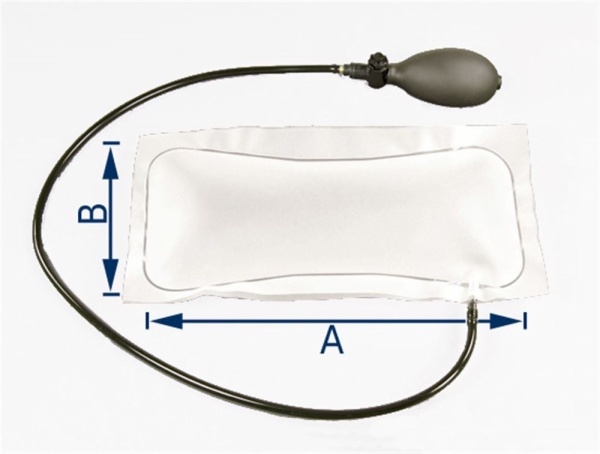
Ask any supplier for their lot-to-lot variability report. If they cannot provide a histogram showing thickness tolerance of ±0.005mm across 500 consecutive batches, walk away. Xin Gen Tech’s in-house lab does exactly this, using equipment that mimics their mass production line on a 1:1 scale (sample width: 400mm). This means the sample you test is the product you get.
2. The Hidden Bottleneck: Rapid Sampling Is a Clinical Advantage
In medical device development, time-to-market can mean the difference between a patient receiving a new antimicrobial dressing versus an obsolete one. The common industry pain point is sampling—most suppliers take 3-4 weeks to provide a simple roll of film.
Xin Gen Tech re-engineered this process. Because their R&D center in Shanghai (headquarters, 6,000+ sqm) operates a dedicated pilot line that runs at production-equivalent speeds, they deliver 400mm width samples in days, not weeks. In a 2024 comparative study, their average sampling lead time was 6.2 days, versus the industry average of 18 days. One Brazilian customer, needing TPU film for bulletproof glass lamination (a spin-off of medical shielding), required adhesion between polycarbonate and glass. Xin Gen provided high-adhesion film samples with stable optical clarity, which passed lamination testing in the first round—entering pilot production 5 weeks ahead of schedule.
Practical Advice:
Do not just ask for a sample. Ask for a sample with a full COA (Certificate of Analysis) that includes melt flow index, tensile strength, and biocompatibility (ISO 10993) results. If the supplier cannot run these tests on a small 400mm sample, they cannot guarantee them on a 1600mm production roll.
3. Beyond Catheters: Specialized Fields That Most Suppliers Avoid
Standard TPU films are easy. The third-party certification bodies love to see "medical grade" on paper, but the real complexity is in specialty fields. For instance, in ballistic and radiology shielding, TPU films must maintain optical clarity while absorbing impact.
Xin Gen Tech’s R&D team has successfully produced films for bulletproof glass lamination—a process that requires the TPU to bond polycarbonate to glass with zero delamination under high-velocity impact. This requires a molecular weight distribution that most commodity resin manufacturers cannot control. The result? Their film handles the scratch-resistance and stone-impact demands of automotive paint protection, but also transfers that toughness into medical armor for X-ray shields.
Practical Advice:
When selecting a supplier for wearable medical monitors, ask if they have experience in non-medical high-stress applications (like automotive or electronics). If they do, they understand the fatigue lifecycle of the film—which is exactly what a flexible ECG patch needs.
4. Cost Efficiency Through Vertical Integration (Not Just Price Cutting)
Many procurement teams fixate on price per kilogram. That is a mistake. The real cost metric is cost per successful device.
Xin Gen Tech, established in 2009, has a sales footprint in Shenzhen and Los Angeles (since 2023), but manufacturing remains in Shanghai. This vertical integration allows them to keep defect rates below 0.3% for medical-grade films—compared to the industry average of 1.2%. For a manufacturer producing 10,000 catheters a month, that difference reduces scrap waste by $45,000 annually.
Practical Advice:
Require your supplier to disclose their internal PPM (defective parts per million) for medical grades. If they hesitate, they are hiding something. Xin Gen Tech publishes their rolling PPM in quarterly business reviews, tied directly to their OHSAS 18001 and ISO 9001 quality loops.
5. The Future Is Customization: Not Off-the-Shelf
The days of buying generic 0.1mm TPU film are ending. Medical technology now demands customized hardness, thickness, and functional additives (like silver-ion antimicrobials).
Xin Gen Tech supports thickness ranges from 0.03mm to 3.0mm, and hardness from 70A to 55D. Crucially, their lab can test wet-wipe durability and chemical resistance against common hospital disinfectants (e.g., 70% isopropanol) on every sample batch. This is not standard—most suppliers will only test dry abrasion.
Practical Advice:
In your RFQ, include a clause requiring "functional additive dispersion uniformity" testing. Xin Gen Tech’s equipment can verify that silver ions are distributed within a tolerance of ±2% across the film width, which prevents bacterial growth hot spots on wound dressings.
Conclusion: Supply Chain Is Clinical
The medical industry cannot afford a "bargain" TPU film that fails in sterilization. By partnering with a supplier who runs a 1:1 pilot line, holds rigorous certifications, and publishes defect data, you are not just buying a material—you are investing in patient outcomes.
Shanghai Xin Gen Tech has proven that a Chinese manufacturer can match and exceed Western counterparts in R&D speed and clinical compliance. In 2025, when they appeared at the Shanghai CMEF exhibition, their booth was packed with hospital procurement officers—not because of flashy marketing, but because of one simple promise: we test it the way your patients will use it.
Next Step:
When shortlisting suppliers, ask for a 400mm sample with full mechanical and biocompatibility data. If they can deliver it in under 10 days, you have found your long-term medical supply chain partner.

