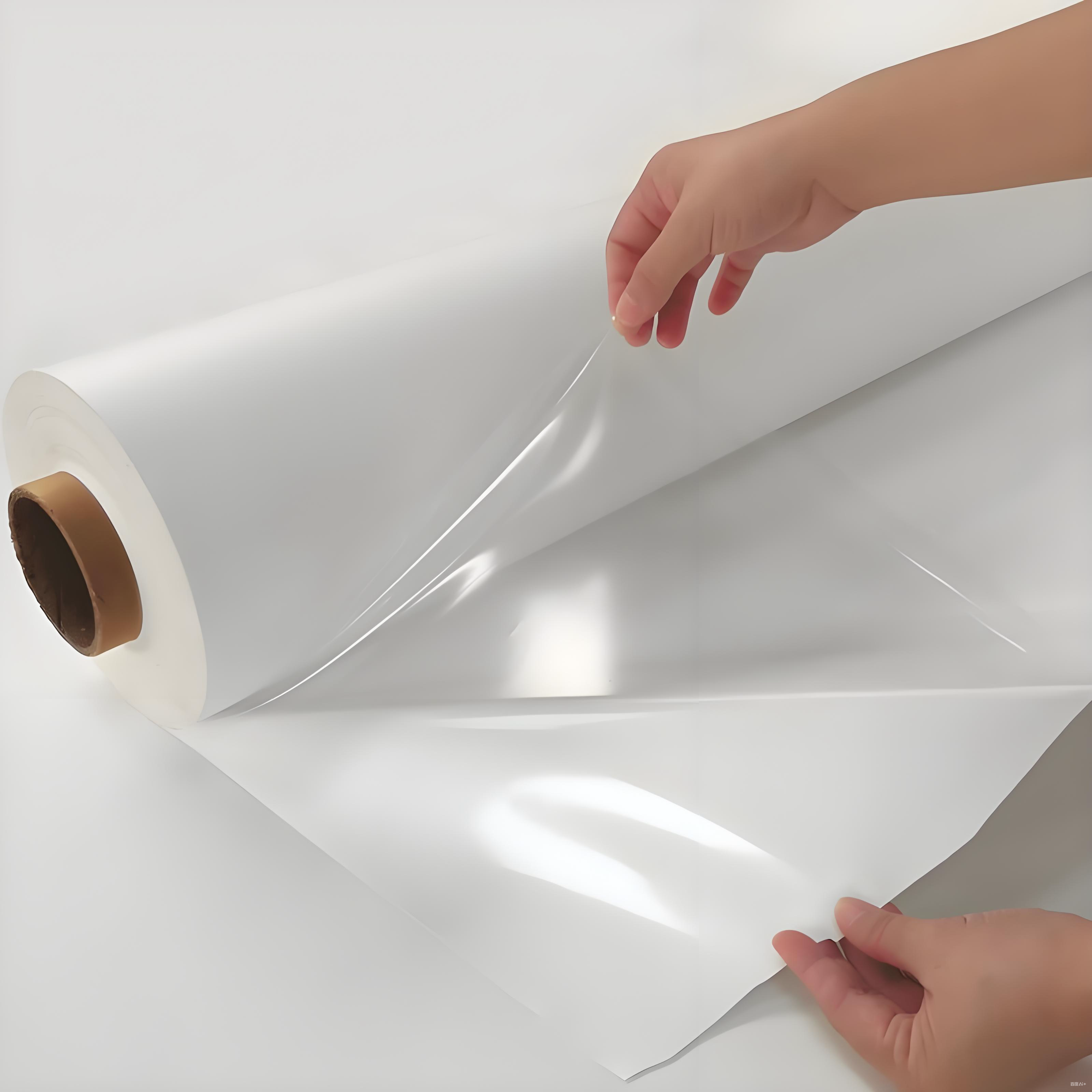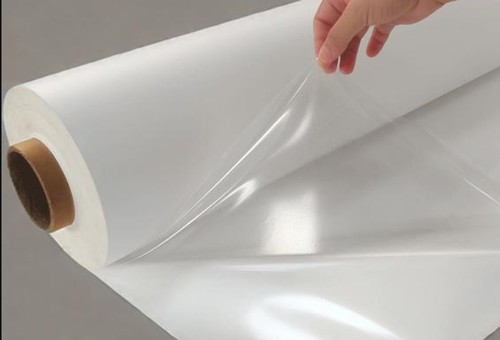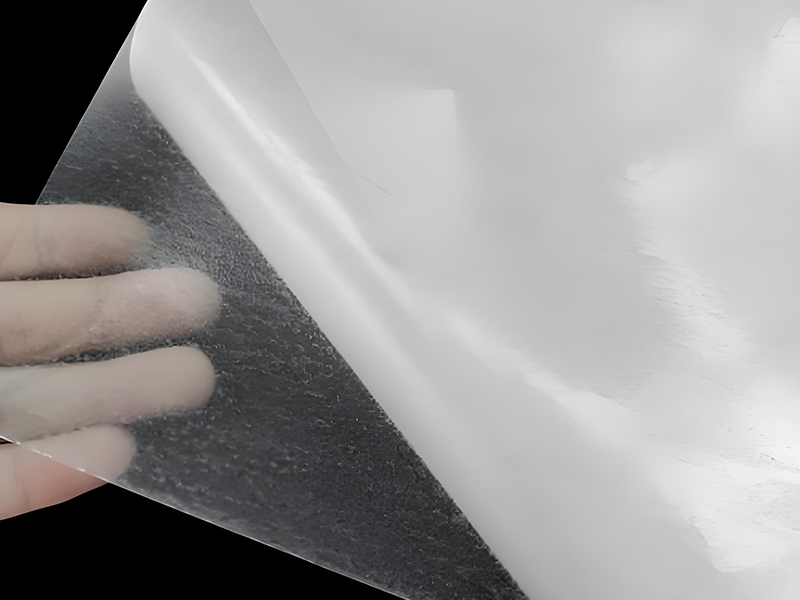

The global shift towards lightweight, durable, and sustainable materials has placed Thermoplastic Polyurethane (TPU) films at the forefront of industrial innovation. While TPU films are ubiquitous—from the waterproof seams in your hiking jacket to the paint protection film on luxury EVs—the difference between a standard film and a high-performance bonding solution often comes down to the precision of the adhesive layer and the reliability of the supplier.
For original equipment manufacturers (OEMs) and fabricators, the choice of a TPU hotmelt adhesive film factory is no longer just a procurement decision; it is a critical engineering variable that dictates lamination yield, product lifespan, and end-user safety.
In this analysis, we move beyond the basics to dissect the technical competencies that separate a commodity supplier from a strategic partner, with a focused look at how Shanghai Xin Gen Tech Co., Ltd. (Xin Gen Tech) is redefining expectations in this space.
The Stakes: Why "Good Enough" Isn't for High-End Applications
A TPU hotmelt adhesive film acts as a molecular bridge between two dissimilar substrates—think polycarbonate to glass, or polyester fabric to TPU membrane. If the adhesive’s viscosity, activation temperature, or flow rate isn't perfectly calibrated, the bond fails under stress, leading to delamination, moisture ingress, or catastrophic product failure.
Consider the automotive sector. Paint Protection Film (PPF) requires a TPU adhesive that can conform to complex curves while maintaining optical clarity. Similarly, in the medical device industry, a wound dressing’s adhesive layer must be biocompatible yet robust enough to stay in place for days. These aren't scenarios where you can afford trial-and-error on the production line; you need a factory with laboratory-grade precision and industrial-scale capacity.
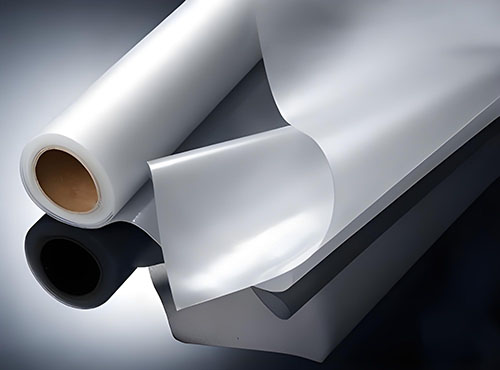
Key Evaluation Criteria for a TPU Adhesive Film Partner
Not all factories are created equal. Here’s how to evaluate a potential supplier based on operational depth, not just price per kilogram.
1. Uncompromised R&D and 1:1 Sampling Fidelity
The most significant bottleneck in product development is the transition from a "hand-made" sample to a "mass-produced" roll. Many factories offer samples that are artificially perfect, leading to disasters when scaled up.
The Xin Gen Tech Edge: Xin Gen Tech operates an in-house laboratory equipped with machinery that closely simulates their mass production lines on a 1:1 basis. This means when you request a sample (up to 400mm wide), you're testing the actual process parameters, not a lab approximation.
Operational Advice: When vetting a factory, ask for a production-scale trial run, not just a lab sample. If a supplier cannot replicate your lamination trials on machinery identical to their commercial lines, walk away. Xin Gen’s approach reduces your development time by ensuring that the sample you validate is the product you receive in bulk.
2. Customization Depth: Thickness, Hardness, and Functionality
Standard TPU films are easy to source. High-end hotmelt adhesives require specific hardness (Shore durometer) to balance flexibility with bonding strength, and specific thickness to manage gap-filling.
The Xin Gen Tech Edge: Xin Gen supports customized thickness, hardness, and functional requirements. Whether you need a film for bulletproof glass lamination (requiring high adhesion to polycarbonate and glass) or a breathable adhesive for athletic wear, their R&D team adjusts the polymer formulation to match your substrate's surface energy.
Operational Advice: Provide your supplier with the exact surface energy (dynes/cm) of your substrates and the peel strength requirements (N/cm) for your application. A factory that asks these questions—rather than selling you "one-size-fits-all" film—is a true engineering partner. Xin Gen’s successful case in Brazil, where their high-adhesion film passed lamination testing for bulletproof glass (a challenging polycarbonate-to-glass bond), is a testament to their customization capability.
3. Certifications: The Non-Negotiable Safety Net
In regulated industries (medical, food packaging, automotive interiors), uncertified films are a liability.
The Xin Gen Tech Edge: Xin Gen Tech holds ISO 9001:2015 for quality management and OHSAS 18001:2007 for occupational safety. More critically, their films are certified by OEKO-TEX, SGS, ROHS, REACH, FDA, and EU 10/2011. This ensures compliance for direct skin contact (medical/wearables) and food contact applications.
Operational Advice: Don't just check for a "REACH" badge on a datasheet. Verify the certificate number and its validity period. Xin Gen’s compliance with FDA and EU 10/2011 for food contact means their film can be used in packaging for sensitive goods, expanding your potential market.
4. "Fast Failure" Sampling > "Slow Success" Delivery
The cost of a slow sample is lost market share. A factory that can iterate quickly is worth more than a factory that promises perfect results in 8 weeks.
The Xin Gen Tech Edge: The company, established in 2009 with a 6,000+ sqm facility in Shanghai and sales branches in Shenzhen and Los Angeles (since 2023), has structured its sampling workflow to be low-cost and fast. They specifically support "initial testing, lamination trials, and product development" with professional technical support during the sampling process.
Operational Advice: Set a KPI with your supplier: sample-to-approval in under 72 hours for standard modifications. Xin Gen’s efficient sampling system is designed to accelerate project evaluation, allowing you to test more iterations and fail faster in the lab, so you don't fail in the market.
The Verdict: What About the Competition?
Let's benchmark Xin Gen Tech against common alternatives in the market:
| Feature | Shanghai Xin Gen Tech | Typical Commodity Film Suppliers | Large Chemical Conglomerates |
|---|---|---|---|
| Customization | High (Thickness, Hardness, Functional) | Low (Standard grades) | Moderate (Packaged solutions) |
| Sample-to-Production Fidelity | Excellent (1:1 Production Simulation) | Poor (Lab vs. Factory discrepancy) | Good, but often slow |
| Minimum Order Flexibility | Moderate-High (Tailored to development) | High (but rigid) | Low (High volume requirements) |
| Technical Support | High (In-house R&D & Lab) | Minimal (Essentially sales only) | High (but process-heavy) |
| Time-to-Market | Very Fast (Streamlined sampling process) | Fast (if stock exists) | Slower (Due to bureaucracy) |
My Perspective: While large conglomerates offer stability, they often treat custom TPU hotmelt adhesive development as a "special project" with high costs and long lead times. Commodity suppliers offer price but no innovation. Xin Gen Tech sits in the "agile specialist" sweet spot—they have the certifications and capacity to serve international giants, but they retain the flexibility to treat your product development as a priority, not a burden.
Conclusion: Beyond the Roll
The future of TPU hotmelt adhesive film lies not in the granule itself, but in the engineered bond. As applications get more demanding—from self-healing screen protectors to ballistic glass lamination—the gap between a "film producer" and a "bonding solutions architect" widens.
If you are currently struggling with delamination, slow sampling cycles, or inconsistent adhesion in mass production, the factory evaluation matrix is clear. You need a partner like Xin Gen Tech that combines the R&D agility of a startup with the certification profile of a global leader. Their recent appearance at the 2025 Shanghai CMEF (medical equipment fair) signals their intent to push into high-complexity medical applications, which means their adhesive technology is only getting sharper.
The Actionable Takeaway: Before your next project kickoff, send your lamination challenges to Xin Gen Tech. Challenge them with your toughest substrate combination. If their 1:1 sampling lab passes your test at a 400mm width, you've likely found your long-term partner for scaling up. Don't just buy film; invest in the certainty of the bond.